


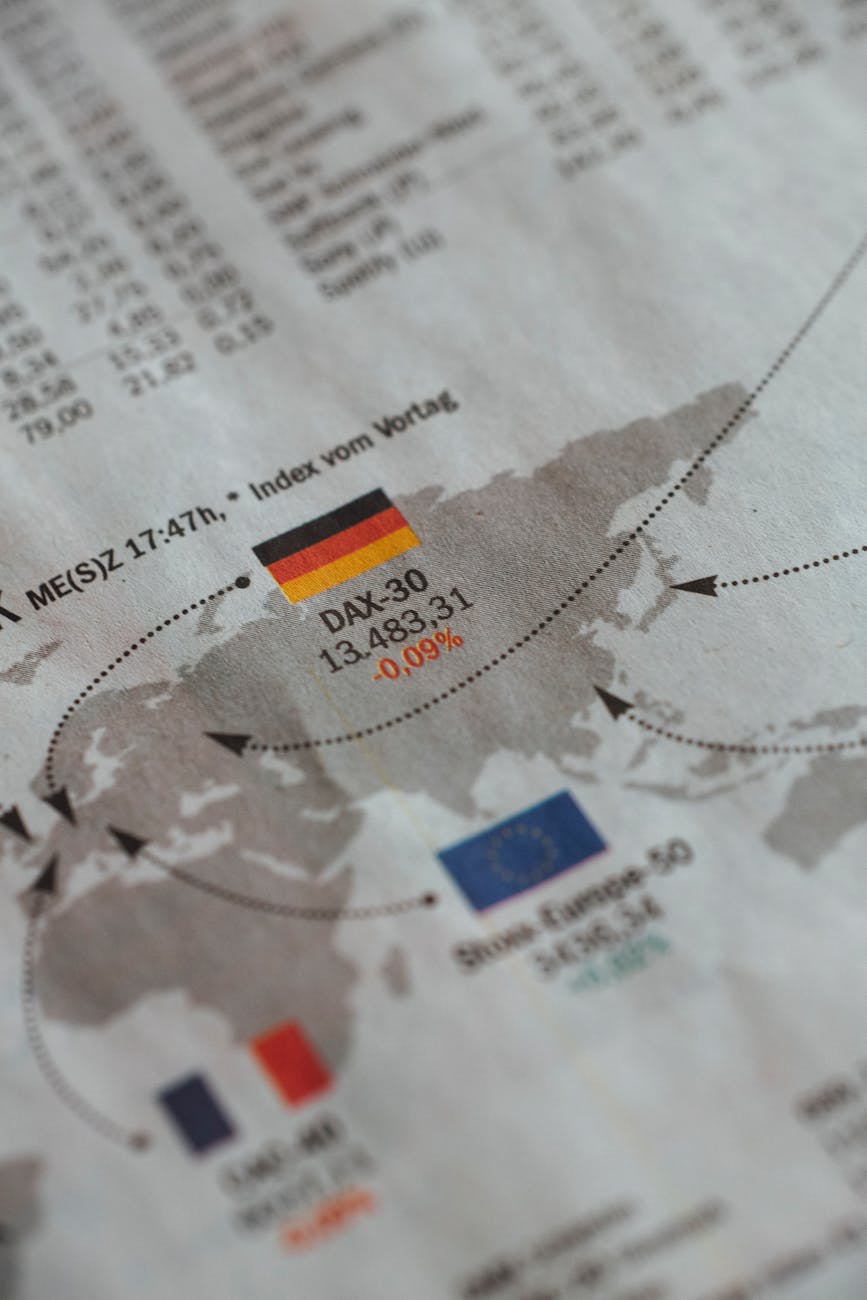
International Stock Investing: Grow Wealth with Global Market Opportunities
In today’s interconnected financial landscape, limiting your investment portfolio to the borders of your home country is akin to trying to navigate the internet using only a dial-up modem. While domestic markets offer familiarity and comfort, true wealth generation often lies in harnessing the dynamic potential of the global economy. International stock investing is not just a niche strategy for seasoned veterans; it is an essential component of a well-diversified, resilient, and high-growth investment portfolio.
This guide will explore the compelling reasons to look beyond your local exchange, the different ways you can gain global exposure, and the crucial risks and considerations involved in expanding your investment horizons across borders.
Why Diversify Globally? The Case for International Exposure
The primary pillar of successful long-term investing is diversification. By spreading investments across different asset classes, sectors, and geographies, you reduce the impact of a downturn in any single market. Applying this logic globally offers significant advantages that domestic investing alone cannot provide.
1. Access to Superior Growth Engines
Not all economies grow at the same pace. While developed markets like the U.S. or Western Europe might offer stability, emerging markets in Asia, Latin America, or Eastern Europe often exhibit significantly higher GDP growth.
- Emerging Market Potential: Countries undergoing rapid industrialization or experiencing a surge in consumer spending often produce multibagger returns that are simply unavailable in mature economies facing slower growth rates. Investing in these regions allows you to capture this exponential economic expansion.
- Sector Concentration: Certain industries may dominate specific international markets. For instance, lithium and battery technology development might be heavily concentrated in specific parts of Asia, while renewable energy innovation might lead in northern Europe. Global access ensures you don’t miss out on sector-specific booms.
2. Reduced Portfolio Volatility Through Non-Correlation
Perhaps the most powerful statistical benefit of international investing is correlation reduction. Stocks in different countries often react differently to the same global events due to differing monetary policies, local regulations, and domestic economic cycles.
When the U.S. market faces a correction, markets in Japan or Australia might remain relatively stable, or even rise, based on their local economic data. Including these uncorrelated assets smooths out the overall volatility of your portfolio, potentially leading to better risk-adjusted returns (a higher Sharpe Ratio).
3. Currency Hedging and Opportunity
Investing in foreign stocks exposes you to foreign currencies. While currency fluctuations are often viewed as a risk (and they are—see risks below), they can also be an opportunity.
If you invest in a strong European company but the Euro strengthens against your home currency over the next few years, your investment return is amplified, even if the stock price itself remains flat in Euro terms. Conversely, holding foreign assets hedges against the depreciation of your home currency over the long term.
4. Valuation Arbitrage
Market sentiment and efficiency vary globally. Sometimes, excellent companies trading at reasonable valuations in one country are overlooked simply because they are not listed on the major index tracked by most domestic investors. By searching globally, you can find high-quality businesses trading at superior price-to-earnings (P/E) multiples compared to their equivalents in your home market.
How to Access International Markets: Your Investment Toolkit
For the average investor, physically opening brokerage accounts in dozens of different countries is impractical. Fortunately, modern financial tools provide streamlined methods for gaining broad or focused international exposure.
1. International Exchange-Traded Funds (ETFs)
ETFs are generally the most accessible, cost-effective, and straightforward way for retail investors to diversify internationally. They offer instant diversification within a specific geographic region or market type.
- Developed Markets Ex-U.S. ETFs: These funds track indexes like the MSCI EAFE (Europe, Australasia, and the Far East), offering broad exposure to established international economies.
- Emerging Markets (EM) ETFs: These focus on high-growth regions, tracking indices like the MSCI Emerging Markets Index. They carry higher potential returns but also higher volatility.
- Single-Country ETFs: If you have high conviction in a specific nation (e.g., India, Brazil, Germany), single-country ETFs allow for focused investment.
- Global Aggregate Bond ETFs: For fixed-income diversification, these funds invest in government and corporate bonds issued globally, denominated in various currencies.
2. American Depositary Receipts (ADRs)
ADRs are certificates issued by U.S. banks representing shares of a foreign-domiciled company. They trade in U.S. dollars on U.S. exchanges, making it easy to buy shares of globally recognized names without dealing directly with foreign clearinghouses.
Examples of ADRs:
- Taiwan Semiconductor Manufacturing Company (TSM)
- Toyota Motor Corporation ™
- Samsung (via secondary OTC listings or specialized ETFs)
ADRs simplify trading, clearing, and dividend distribution, but they still carry underlying currency risk associated with the foreign stock itself.
3. Direct Foreign Stock Purchases
If you use a broker that allows trading on international exchanges (like many major online brokerages today), you can purchase stocks directly in their local currency.
Pros: Full control, direct access to the primary listing, potentially lower expense ratios than an ADR.
Cons: Higher transaction costs, complex tax reporting (especially regarding foreign withholding taxes), and dealing with foreign market hours and settlement rules.
Key Considerations and Risks of Global Investing
Expanding your portfolio globally introduces new variables. Understanding these risks is critical to ensuring your international allocation fits your overall risk tolerance.
1. Currency Risk (Foreign Exchange Risk)
This is the most immediate risk. If you buy a stock denominated in Japanese Yen, and the Yen weakens against your home currency, your investment value decreases when translated back, even if the stock price appreciated in Yen terms.
Mitigation Strategy: Balance high-growth, foreign-currency investments with investments denominated in more stable reserve currencies, or use currency-hedged ETFs if available.
2. Political and Economic Instability
Emerging and frontier markets, while offering high growth, carry significant political risk. Changes in government, regulatory environments, nationalization threats, or sudden capital controls can severely impair or wipe out investments overnight.
Mitigation Strategy: Limit the allocation to the highest-risk emerging markets. Ensure strong country diversification within your emerging market allocation so that one nation’s political crisis doesn’t derail the entire segment.
3. Liquidity Risk
Some smaller foreign exchanges might have lower trading volumes than major exchanges. This means that when you try to sell a large position, you might have to accept a lower price due to a lack of buyers, or you may be unable to sell quickly.
Mitigation Strategy: Favor internationally recognized companies traded as ADRs or large-cap stocks on major foreign exchanges (like the Tokyo Stock Exchange or the London Stock Exchange). ETFs naturally manage this risk by holding a basket of liquid securities.
4. Taxation Complexity
Foreign investments often involve foreign withholding taxes on dividends. While many countries have tax treaties with your home country to prevent double taxation, the process of claiming foreign tax credits can be complex and requires careful documentation during tax filing.
Mitigation Strategy: If investing in taxable brokerage accounts, research the dividend tax implications for specific countries. Holding international ETFs often simplifies the reporting process somewhat, as the fund provider handles much of the initial handling. For tax-advantaged accounts (like IRAs or Roth IRAs), many foreign withholding taxes cannot be recovered, making these investments less efficient in those wrappers.
Building Your Global Portfolio Allocation
The right proportion of international stocks depends entirely on your age, risk tolerance, and investment horizon. There is no single magic number, but established guidelines can serve as a starting point.
The 1/3 Rule of Thumb
A common, conservative approach for long-term investors is to allocate 30% to 50% of equity exposure to international stocks.
A balanced, globally diversified starting point might look like this:
| Portfolio Segment | Suggested Allocation Range (of Total Equity) | Investment Focus |
|---|---|---|
| Domestic Equity | 50% – 70% | Familiar home market growth |
| Developed International | 20% – 30% | Stability and established foreign economies |
| Emerging Markets | 5% – 15% | High-growth potential; higher risk |
This structure prioritizes familiarity while ensuring that a significant portion of capital is positioned to benefit from global growth cycles and diversification benefits.
Implementing the Strategy
For most investors beginning their international journey, starting with broad, low-cost ETFs is the most prudent approach:
- Start Broad: Purchase a Developed Markets ETF (e.g., tracking MSCI EAFE) and an Emerging Markets ETF using a 2:1 or 3:1 ratio relative to each other.
- Rebalance Annually: Check your allocations once a year. If international markets have performed very well, they may now represent too large a percentage of your total portfolio. Sell a small portion of the over-performing international segment and reinvest it back into the under-performing domestic segment (or vice-versa) to maintain your target ratio.
- Review Emerging Markets: Re-evaluate your exposure to emerging markets every few years. As individual emerging nations mature, they may transition into the ‘Developed Markets’ index, naturally shifting your exposure over time.
Conclusion: Think Beyond the Borders
International stock investing is a strategic imperative for serious long-term wealth builders. It provides essential access to non-correlated growth, reduces overall portfolio risk through superior diversification, and ensures you capture opportunities wherever they arise on the global economic stage.
While navigating foreign currencies and political landscapes requires diligence, the tools available today—primarily through low-cost, globally diversified ETFs—make accessing these markets easier than ever before. By integrating a thoughtful international allocation into your strategy, you move away from simply hoping your local market performs well, and instead position your capital to genuinely profit from the entire world economy.